
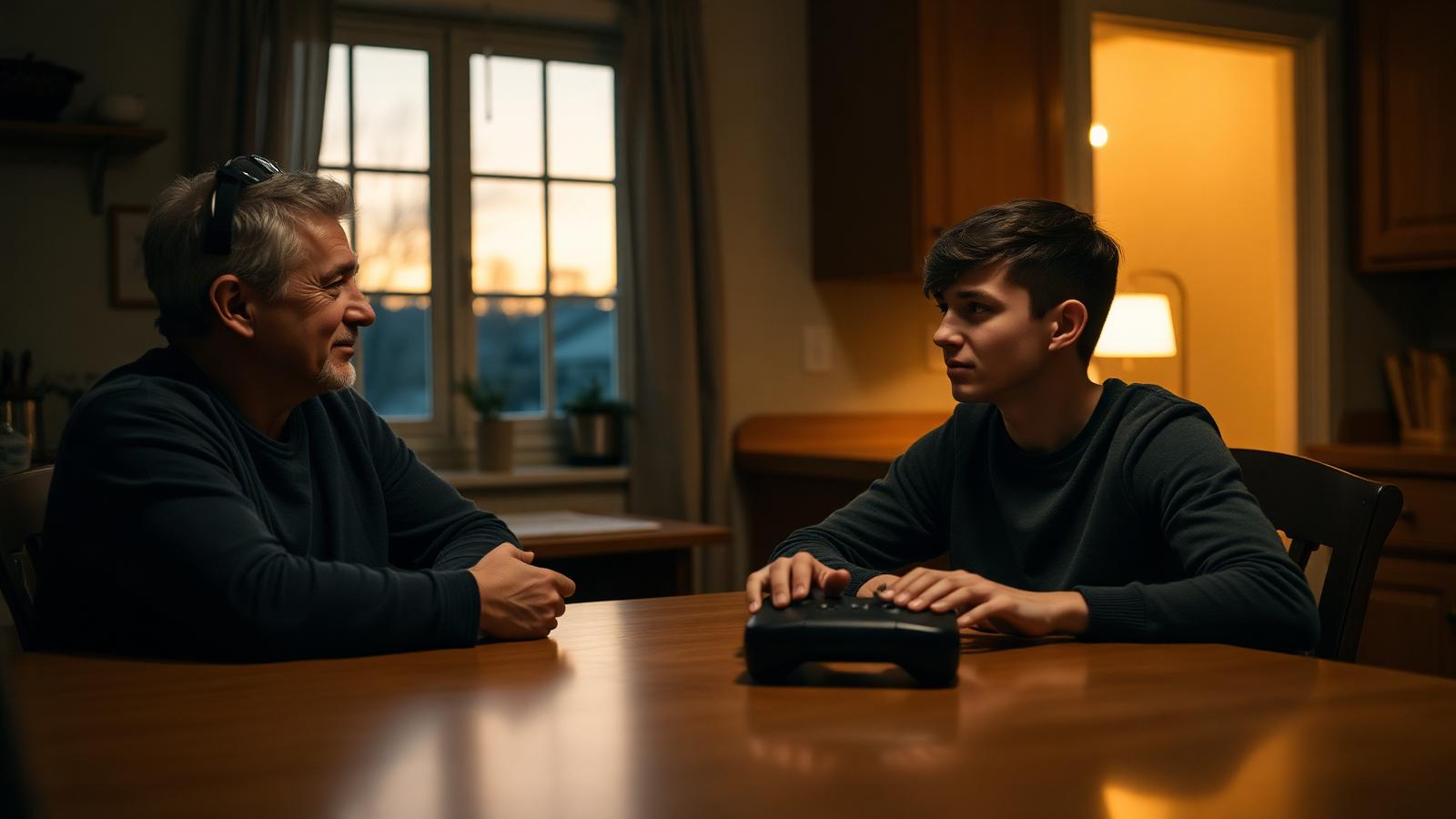
Most parents do not actually have a "screen time problem." They have a "screen time fight" problem. The rule is not the issue. The way the rule lands — the yelling, the slamming doors, the bargaining, the guilt afterward — is what is wearing the family down. Boundaries can work. They just have to be built differently than most of us were taught.
Why ordinary rules so often blow up
When boundaries are made in the heat of the moment, enforced inconsistently, or used as punishment, they stop being structure and start being weapons. Kids do not feel guided. They feel attacked. And a child who feels attacked stops listening to the rule and starts defending himself from the parent.
That is why the same household can have "no screens after 9pm" written on the fridge and still have a fight about it every night. The problem is not the rule. The problem is the relationship the rule is being delivered inside of.
The principles that make boundaries actually work
Before any specific rules, get these four principles right. They will save you a hundred arguments.
- Calm, not reactive. Boundaries decided when you are angry are almost always too strict, too vague, or impossible to enforce. Decide rules cold. Deliver rules cold.
- Predictable, not surprising. Kids tolerate limits much better when they can see them coming. Surprise crackdowns feel like punishment, even when they are reasonable.
- Co-created, not dictated. A boundary your child helped shape is one he is more likely to respect. You still have final say. He still has real input.
- Connection-protected. Connection is never the consequence. You do not withdraw love, warmth, or presence to enforce a screen rule. That is the line you do not cross.
A simple framework: protect, agree, enforce
1. Protect the non-negotiables
Some things are not up for negotiation, and naming them clearly takes huge amounts of pressure off the rest. In most healthy homes, the non-negotiables are: sleep, school, meals together, basic hygiene, and physical safety. Gaming does not get to eat any of these.
Write them down in one short sentence. "In our house, sleep, school, dinner together, and your body come before gaming. Always." That sentence becomes the foundation. Everything else is negotiable.
2. Agree on the rhythm of the week
Sit down with your child — outside a fight, ideally on a weekend — and design the week together. School nights vs. weekends. Homework first or after a short reset. A clear end time. A wind-down window before bed. Where devices live overnight.
Ask real questions: "What feels fair?" "What would you push back on?" "What time honestly works for stopping on a school night?" You may be surprised how reasonable kids are when they are treated as partners in the rule rather than targets of it.
Write the agreement down. Put it somewhere visible. Sign it together if that feels right. The point is that when conflict comes — and it will — you are both referring to a shared document, not to a parent's mood.
3. Enforce calmly and consistently
The hardest part is not the rule. It is staying calm when the rule is being tested. Three moves help:
- Warn early, not late. "Ten minutes" and "five minutes" warnings work better than a sudden "off, now." Many games cannot be paused mid-match. Respect that.
- Use the agreement, not your authority. "This is what we agreed to" beats "Because I said so." You are pointing at a shared rule, not winning a battle.
- Hold the line without escalating. Your child may melt down. That does not mean the boundary was wrong. It means the boundary is doing its job. Stay warm. Stay firm. Do not negotiate during a meltdown.
Common mistakes that turn boundaries into wars
- Inconsistency. Letting the rule slide when you are tired teaches your child that the rule is really about your mood, not a real limit.
- Surprise crackdowns. Tolerating heavy gaming for weeks and then suddenly banning it. The whiplash feels like betrayal.
- Using gaming as the only consequence for everything. When every misstep costs screen time, screen time becomes the most important thing in the house.
- Withdrawing connection. Silent treatment, sarcasm, cold shoulder. These do not enforce boundaries. They wreck trust.
- Skipping the conversation about why. "Because I said so" works for a while. "Because sleep and your brain and our relationship matter" works for life.
Sample boundaries you can adapt
These are not "the rules." They are examples of what calm, fair, specific boundaries can look like. Adapt them to your family.
- Gaming starts after homework is genuinely done, not started.
- School-night gaming ends 45 minutes before bedtime to allow the brain to settle.
- Devices charge overnight outside the bedroom.
- Weekends have a clear daily cap agreed in advance, not a free-for-all.
- Meals are screen-free for everyone, including parents.
- One full day a week has a longer screen-off block for something offline, chosen by your child.
What to do when you have already lost the room
If gaming in your home has been a war for a long time, do not try to fix everything in one weekend. Pick one boundary that matters most — usually sleep — and rebuild from there. Apologize for the parts you handled badly. Yes, really. A genuine, specific apology from a parent is one of the most disarming things a child can experience, and it almost always lowers the temperature.
Then go slow. Boundaries built on rebuilt trust hold. Boundaries imposed on top of broken trust collapse. If you also need to repair the relationship itself, start with How to Reconnect With a Child Who Only Wants to Game.
The real goal
The goal of a gaming boundary is not obedience. It is to protect the things that make your child a whole person — sleep, body, mind, relationships — while leaving plenty of room for him to enjoy the thing he loves. When boundaries are framed that way, kids stop hearing "you are bad" and start hearing "I am paying attention to your life." That is a very different conversation. And it is the one that finally ends the war.
Ready to understand what is really happening behind the screen?
Why Won't He Just Log Off? is a practical and compassionate guide for parents who are tired of fighting over gaming and ready to rebuild connection.
FAQ
Frequently asked questions
How many hours of gaming per day is reasonable?
There is no magic number, but most families do well with shorter, predictable windows on school nights — often 30 to 90 minutes — and longer, capped sessions on weekends. The better question than hours is whether sleep, school, body care, and relationships are intact.
What if my child refuses to agree to any limits?
You still have final say. Co-creation does not mean a child can veto a boundary. It means he gets real input within limits you set. If he refuses to engage, write a fair rule yourself, explain the reasoning calmly, and enforce it consistently.
Should I use parental controls and app timers?
Yes, especially for younger kids and for protecting sleep. Treat them as supportive scaffolding, not as a substitute for conversation. Tools enforce. Relationship teaches.
Is it okay to take away gaming as punishment for other things?
Sometimes — but use it sparingly. When every misbehaviour costs screen time, gaming becomes the most powerful thing in the house and every conflict turns into a gaming fight. Natural consequences tied to the actual issue usually work better.
How do I handle a meltdown when I enforce the boundary?
Stay warm, stay firm, and do not negotiate during the storm. Acknowledge the feeling ('I know stopping feels brutal right now'), hold the limit, and circle back later when he is regulated. The boundary is doing its job — the storm is grief, not proof you were wrong.
What if my partner and I disagree on rules?
Settle it privately, not in front of the child. Inconsistent enforcement between parents is one of the fastest ways to make any boundary collapse. Agree on the non-negotiables, write them down, and present a united front even when you compromise behind the scenes.