Every busy week ends the same way: a folder of recordings, a Slack dump of “AI summaries,” and a quiet agreement that someone will “circle back.” By Friday the transcript is unread. By next month nobody remembers who owned the follow-up. The meeting happened. The work did not.
AI adoption does not stall because your team lacks another notetaker. It stalls because notes stay siloed—useful for search, useless for shipping. For SMEs building generative AI for business workflows, the durable upgrade is blunt: capture the meeting, extract owners and next steps, and push those commitments into email and calendar where work actually starts.
Transcripts feel like progress. They are unread debt.
Recording everything looks responsible. You “have the context.” You can paste a summary into the channel. You tell leadership the team is “using meeting AI.”
What actually happens: decisions live in a tool nobody opens after the call. Action items lack a named owner or a date. Follow-ups never become calendar blocks or draft emails. When the next notetaker logo ships, you inherit the same habit under a new brand—still paying a capture tax for work that should have left the transcript the same day.
Seat licenses plus unread summaries are not adoption. They are a museum of conversations that never became tasks.
What the Superhuman × Fathom signal is actually saying
On September 14, 2026, an X News cluster on Superhuman acquiring Fathom framed the shift CEOs keep repeating: meeting intelligence only matters when notes feed email, calendar, documents, and agents—not when they die as another siloed transcript. Circulating coverage and Superhuman’s own announcement describe the bet clearly: Fathom’s capture, summaries, decisions, and action items are meant to travel into Superhuman’s productivity suite so agents and humans can act on what was said.
Treat that as a practitioner product signal—not peer-reviewed research for every integration detail, and not a ranking of which notetaker “wins.” The durable SME lesson is the workflow shape: capture → owners + next steps → push into the tools where work ships.
The same cluster’s punchline matches what I see in corporate AI training: teams adopt AI when meetings create work—not when they produce another unread transcript.
The three-step handoff (capture · extract · push)
Here is the version I teach. Narrow enough that a busy ops, sales, or leadership team can run it this month without waiting for a platform acquisition to land in your stack.
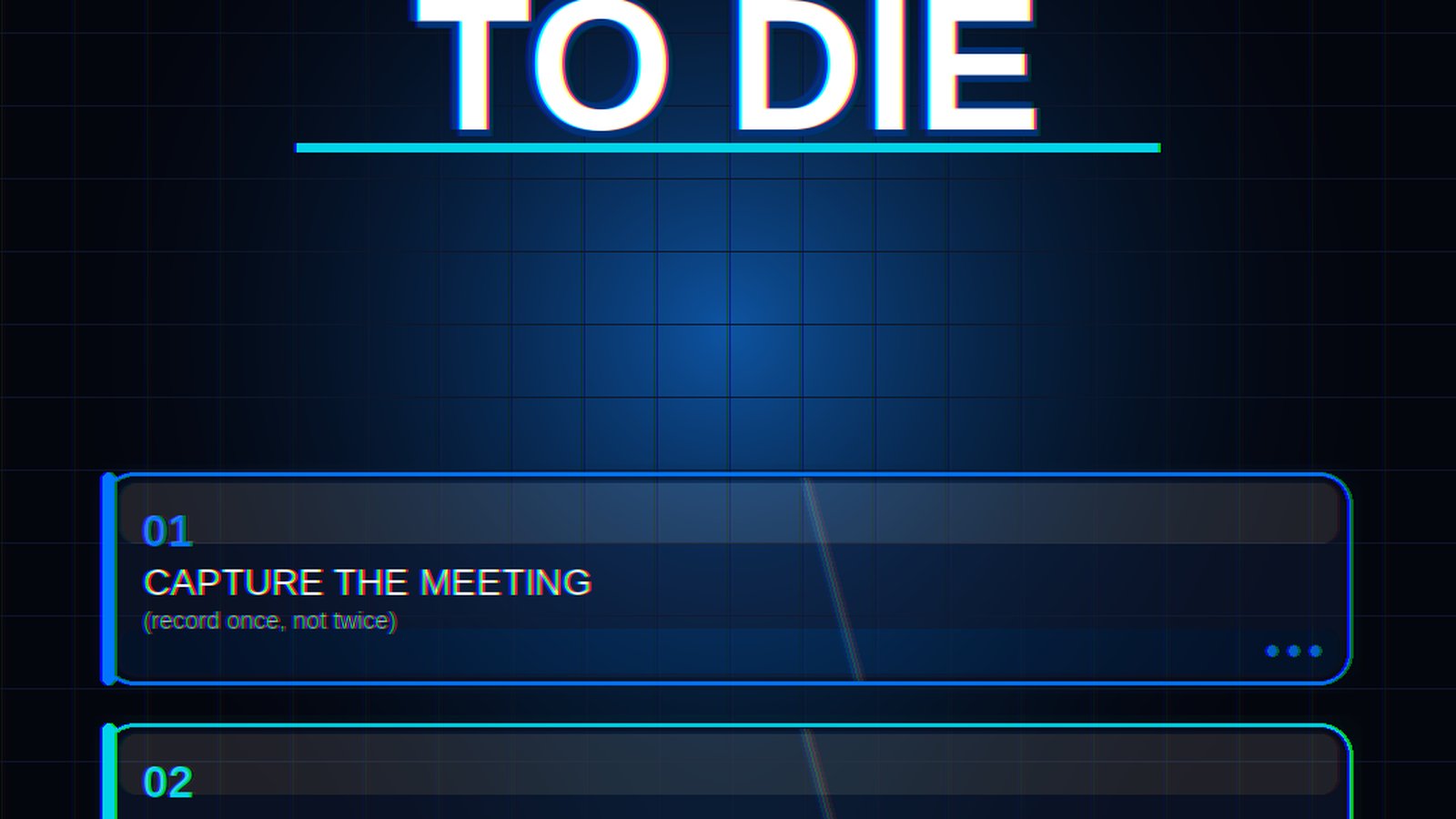
1. Capture the meeting (once, in one place)
Pick a single capture path per recurring meeting type—standup, client call, hiring loop, board prep. Bot or bot-free, whatever your culture tolerates. The rule is consistency: one recording or live summary that the team trusts, not three parallel note-takers fighting in the channel.
If capture is optional, notes die by default. If capture is automatic and owned, you at least have raw material worth extracting.
2. Extract owners + next steps (before anyone leaves the room)
Do not stop at “summary.” Force a short action block: who · what · by when. Ambiguous verbs (“look into,” “sync,” “explore”) get rewritten into shippable commitments. Unowned items get a temporary owner or get cut.
This is the judgment step AI drafts and humans finalize. A clever paragraph with no owners is still unread debt.
3. Push into email / calendar (same day)
Move commitments out of the notes app: calendar holds for the follow-up, draft emails for the client update, tickets or tracker rows for the build work. The transcript can stay searchable. The work must not stay trapped there.
If an item never appears in email, calendar, or the tracker, treat it as unfinished—even if the AI summary looks polished.
| Notes-that-die habit | Notes-that-ship habit |
|---|---|
| Record everything, open nothing | One capture path per meeting type |
| “Great summary” in Slack | Owners + next steps before the call ends |
| Action items live only in the notetaker | Push to email / calendar / tracker same day |
| Search later when someone remembers | Commitments already on the calendar |
| Training = “try the new meeting AI” | Training = capture → extract → push |
Why SMEs win when meetings create work
Large enterprises can fund ops teams that manually re-type action items all afternoon. Most SMEs cannot. You need one trustworthy handoff—client follow-ups, hiring next steps, weekly ops commitments—where the meeting ends and the calendar already knows what happens next.
Capture without extraction is a archive. Extraction without push is a pretty checklist. Push without ownership is spam. Together they make AI adoption measurable as work that left the transcript—not as recording minutes stored forever.
You do not need Superhuman’s full suite on day one. You need the habit: capture the meeting, extract owners and next steps, push into email and calendar. When the next meeting-intelligence product ships, the habit stays; only the connector changes.
A 30-day meeting-to-work sprint (narrow on purpose)
Week 1 — Kill one unread-transcript loop. Name one recurring meeting whose notes die (sales debrief, ops standup, client weekly). Pick one capture tool. Owner = who posts the action block.
Week 2 — Force owners + dates. Same meeting, same capture. No summary is “done” until every next step has a name and a when. Cut fluff items rather than leaving ghosts.
Week 3 — Push same day. Require that extracted items appear in email, calendar, or the tracker before EOD. Measure how many still live only in the notes app.
Week 4 — Train the team, not the novelty. Use corporate AI training to lock the punchline: teams adopt AI when meetings create work—not another unread transcript. Keep the meeting type that stuck; drop the rest.
Soft next step
If your organization already bought a notetaker and still watches commitments vanish between the call and Friday, the gap is usually extraction and push—not another recording feature. I am Nathan Graham, founder of Synthetic Echo—Toronto-based · serving Canada & North America. I offer a free discovery call to map which meeting deserves a notes-that-ship path first, and how training can lock in AI adoption without another abandoned transcript folder. Prioritization conversation—not a free full audit.
Still collecting unread transcripts?
Nathan Graham helps SMEs capture meetings, extract owners, and push next steps into email and calendar—so generative AI for business workflows creates work, not another notes museum.
Frequently asked questions
Is a great AI summary enough?
No. A polished paragraph with no owners or dates is still unread debt. Force a short action block—who, what, by when—before anyone leaves the room.
Do we need Superhuman or Fathom specifically?
No. The durable lesson is workflow shape: capture → owners + next steps → push into the tools where work ships. When the next meeting-intelligence product arrives, keep the habit; only the connector changes.
What counts as done for a meeting?
Extracted items appear in email, calendar, or the tracker the same day. If an item lives only in the notes app, treat it as unfinished—even if the summary looks polished.
What should I do next?
Book a free discovery call to map which meeting deserves a notes-that-ship path first and how training can lock in AI adoption without another abandoned transcript folder. It is a prioritization conversation, not a free full audit.