Every long agent run starts the same way: someone opens a powerful model, then types step one, waits, types step two, waits, corrects a click, waits again. By lunch the “agent” has burned half a weekly quota and produced a half-finished artifact that still needs a human at the keyboard.
AI adoption does not stall because your team lacks a cleverer model. It stalls because people still micromanage every click. For SMEs building generative AI for business workflows, the durable upgrade is blunt: write an outcome brief, let the agent plan and act, and review the checkpoint—not the keystroke stream.
Micromanaging feels like control. It is babysitting debt.
Step-by-step prompting looks responsible. You “stay in the loop.” You can screenshot each nudge for Slack. You tell the board the team is “hands-on with agents.”
What actually happens: the human becomes the scheduler. Context resets between nudges. The agent never gets a clean stretch to plan, act, and self-check. Quotas disappear on thrash. When the next long-horizon model ships, you inherit the same habit under a new logo—still paying a babysitting tax for work that should finish between reviews.
Seat licenses plus constant hovering are not adoption. They are a second job that only the curious keep doing after demo week.
What the Astra long-task signal is actually saying
On September 14, 2026, an X News cluster on OpenAI’s GPT-6 Astra handling long computer tasks framed the shift: Astra as a state-of-the-art agent for extended work across browsers, apps, and code—planning, acting, and checking without constant nudges. Circulating summaries cite strong desktop-benchmark performance (including a reported 72.6% on OSWorld 2.0) and workflows that treat it as a persistent operator: outcome-level instructions, reusable knowledge, and pauses for human review instead of play-by-play coaching.
Treat that as a practitioner product signal—not peer-reviewed research for every detail, and not a ranking of which model “wins.” The durable SME lesson is the workflow shape: outcome briefs + autonomous stretch + checkpoint review beat click-by-click micromanagement.
A companion X News cluster on Astra thrilling users while burning through limits fast is the cost twin. Circulating posts describe weekly quotas dropping near zero on heavy coding and agentic computer-use runs—even on Pro-class plans—with people adapting by reserving the heavy model for high-value stretches and mixing lighter models for grunt work. Not a scoreboard: a routing habit. Spend the expensive stretch where an outcome brief can finish something, not where you babysit every click.
The three-step handoff (brief · stretch · checkpoint)
Here is the version I teach in corporate AI training. Narrow enough that a busy ops, support, or eng lead can run it this month without a platform rewrite.
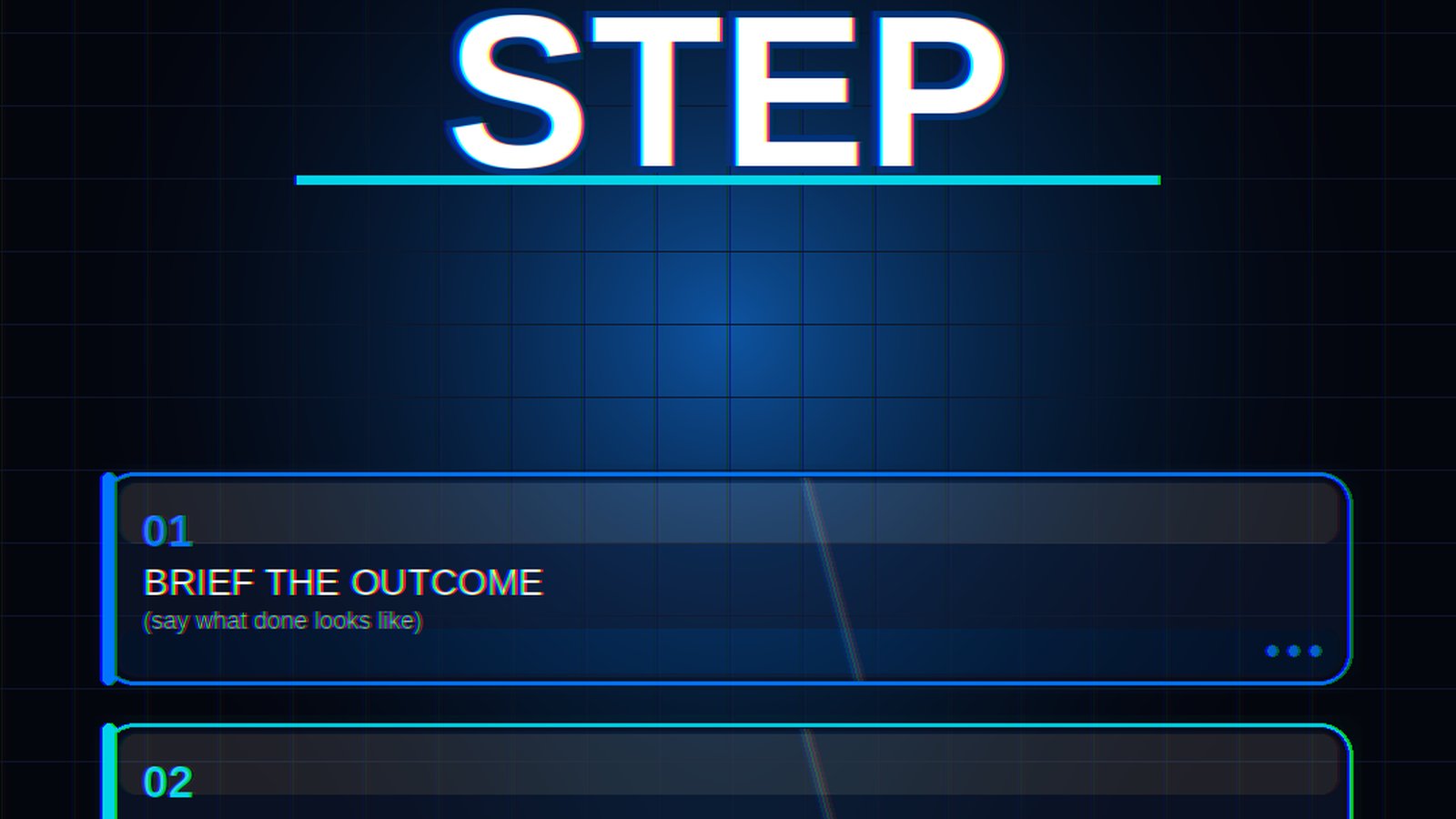
1. Brief the outcome (not the click list)
Write what “done” looks like before the agent opens a tab: artifact, constraints, allowed sources, and what it must not invent. Include acceptance checks (“draft ready for human review,” “numbers match the live sheet,” “no client emails sent”).
A good brief is a one-pager: role, audience, deliverable, never-do rules, checkpoint format. If you cannot state the outcome in plain English, you are still exploring in chat—not ready to hand off the stretch.
2. Let it plan + act (stop mid-step coaching)
Once the brief is clear, give the agent room to plan, use tools, and work the stretch. Interrupt only if something is unsafe or off-brief.
Mid-step coaching feels helpful. It usually resets the plan and burns quota on thrash. Treat long computer-use agents like a competent operator on a timed block: they work until the checkpoint, not until you type “now click File → Export.”
3. Review the checkpoint (judgment, not keystroke audit)
Review at a defined gate: draft PR, filled checklist, exported package, or a short status with evidence. Ask: Does this meet the brief? What must a human fix? What updates standing instructions next time?
You own the gate. The agent owns the stretch. That split turns AI adoption into a management habit instead of watching cursors move.
| Micromanage habit | Outcome-brief habit |
|---|---|
| “Click here, then here…” | One outcome + constraints + never-dos |
| Interrupt after every tool call | Timed stretch until checkpoint |
| Quota burned on thrash | Heavy model reserved for high-value stretches |
| Review = replaying every click | Review = artifact vs. acceptance checks |
| Training = “try the new agent” | Training = brief → stretch → checkpoint |
Why SMEs win when agents finish the stretch
Large enterprises can fund war rooms that watch agent sessions all day. Most SMEs cannot. You need one trustworthy handoff—ops digests, support triage packages, research briefs, coding assistants with review gates—where a human briefs once and reviews once.
Outcome briefs shrink the babysitting tax. Checkpoints shrink silent failure. Quota discipline keeps expensive models on work that ships. Together they make AI adoption measurable as finished stretches—not mid-run corrections typed in a demo.
You do not need every computer-use logo on day one. You need the habit: brief the outcome, let it plan and act, review the checkpoint. When the next long-horizon agent ships, the habit stays; only the harness changes.
A 30-day outcome-brief sprint (narrow on purpose)
Week 1 — Kill one babysitting loop. Name one workflow that dies in step-by-step chat (proposal package, weekly ops digest, ticket triage draft, scoped coding task). Write a one-page outcome brief. Owner = who ships the artifact.
Week 2 — Hand off one stretch. Same workflow, plan-and-act room, one checkpoint. Fix the brief when something breaks—not the urge to hover.
Week 3 — Install quota discipline. Reserve the heavy / long-horizon model for high-value stretches that earn a checkpoint. Route grunt rewrite and short Q&A to lighter options so the team stops “trying Astra on everything.”
Week 4 — Train the team, not the novelty. Use corporate AI training to lock the punchline: teams adopt AI when it finishes the stretch—not when you micromanage every click. Measure checkpoint pass rate and rewrite time on that one workflow. Keep what stuck.
Soft next step
If your organization already bought agent seats and still watches people coach every click, the gap is usually briefing and checkpoints—not another model bake-off. I am Nathan Graham, founder of Synthetic Echo—Toronto-based · serving Canada & North America. I offer a free discovery call to map which workflow deserves an outcome-brief path first, and how training can lock in AI adoption without another abandoned babysitting loop. Prioritization conversation—not a free full audit.
Still babysitting every AI click?
Nathan Graham helps SMEs brief outcomes, hand off agent stretches, and review checkpoints—so generative AI for business workflows finishes work between reviews.
Frequently asked questions
Should we stop watching agent sessions entirely?
No. Keep a human review gate at a defined checkpoint—draft PR, filled checklist, or status with evidence. Interrupt mid-stretch only for safety or off-brief risk, not for play-by-play coaching.
What belongs in an outcome brief?
What done looks like: artifact, constraints, allowed sources, never-do rules, and acceptance checks. If you cannot state the outcome in plain English, you are still exploring in chat—not ready to hand off the stretch.
How should we handle expensive long-horizon model quotas?
Reserve the heavy model for high-value stretches that earn a checkpoint. Route grunt rewrite and short Q&A to lighter options so the team stops burning weekly limits on thrash.
What should I do next?
Book a free discovery call to map which workflow deserves an outcome-brief path first and how corporate AI training can lock in AI adoption without another abandoned babysitting loop. It is a prioritization conversation, not a free full audit.