Every quarter someone on your team asks which model you "should switch to." GPT got better. Claude shipped a new mode. A LinkedIn thread swears Gemini crushed a benchmark. Meanwhile the same drafts still need rewriting, the same tools still touch the wrong folders, and the same managers still do not trust what leaves the chat.
AI adoption does not stall because you missed the next model drop. It stalls because the system around the model is still improvisation. For SMEs building generative AI for business workflows, the durable move is the AI harness: trusted context, bounded tools, and a human review gate—then swap models freely.
Model chasing feels like strategy. It isn't.
Model chasing looks responsible. You evaluate demos. You update the vendor shortlist. You tell finance you are "keeping options open."
What actually happens: standing instructions stay thin, tool permissions stay wide, and nothing ships without a hero who knows how to babysit the output. Quality still depends on who prompted. Risk still depends on who clicked "allow." When the next model lands, you re-run the same demo theater—and the operating system of work does not move one inch.
Seat licenses without a harness are not adoption. They are a subscription to novelty.
What the harness conversation is actually saying
In mid-September 2026, an X News cluster framed it bluntly: AI agents rely on the harness more than the model. The circulating summary describes trusted context, bounded tools, evaluation, human judgment, and operational controls—the layers that turn a language model into something that can do real work. Experts there break the stack into triggers, orchestration, fixed tools, trusted context, controls, and runtime tracking, with the model roughly ~20% of success (community framing often puts the rest near ~80%).
Treat that as a practitioner signal—not peer-reviewed research for every percentage. The durable lesson: swap GPT for Claude for Gemini and a good harness barely notices. Your moat is workflow knowledge, tools, context, evals, and controls—not a scoreboard screenshot.
Build these three layers first
Here is the version I teach in corporate AI training. Keep it boring enough that a busy ops lead can run it this month.
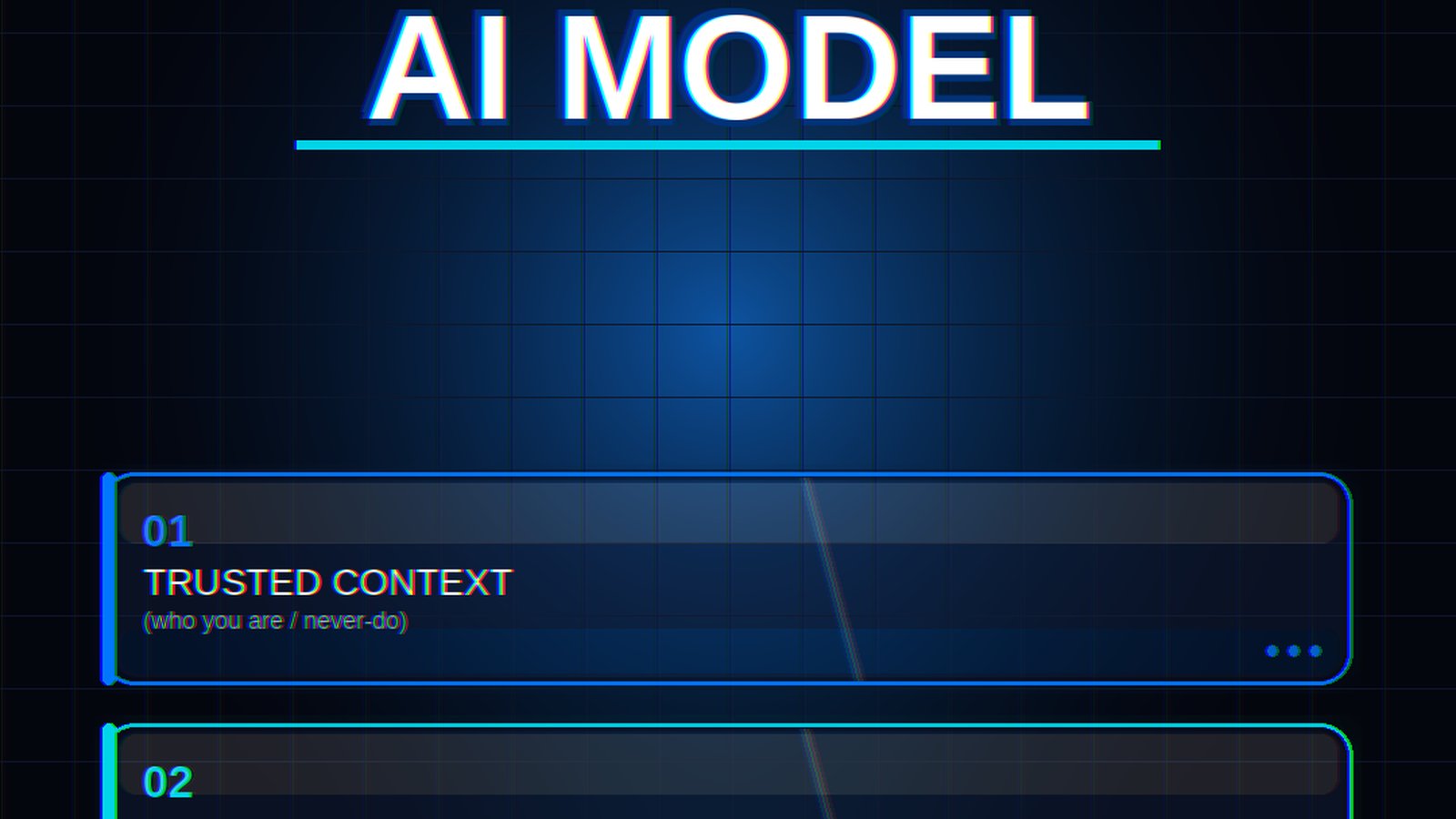
1. Trusted context (who you are / never-do)
Encode once: who you serve, how you sound, which docs are canonical, what you never invent, and where "truth" lives. Put it in Project instructions, shared knowledge files, CLAUDE.md, or Cursor rules—whatever your stack already supports.
Without trusted context, every chat starts from zero. With it, short task prompts ride on shared memory—consistent drafts without pasting the brand bible again.
2. Bounded tools (what it can touch)
An agent without boundaries is a polite liability. Decide which systems it may read, which it may draft into, and which it may never touch without a human. Prefer fixed, named tools over "browse the whole drive." Prefer least privilege over "just connect everything so it feels magical."
Connectors help; they are not the harness. OpenAI's mid-September 16 ChatGPT plugins for small businesses—HubSpot, Dropbox, Canva, QuickBooks, Gusto, Stripe, and peers—are timely product news. Brief takeaway: wiring CRM and finance into ChatGPT accelerates work and expands blast radius. Design permissions and "what this agent may see" before celebrating the demo.
3. Human review gate (before it ships)
Decide the gate before the model runs: who reviews, what "good" looks like, which outputs can auto-route, and which always stop for a person. Client-facing copy, financial numbers, legal claims, and code that hits production should not leave the building as plausible prose.
A light-touch reminder from a related X News cluster on "vibe coding": prompting without grasping the output is fine for prototypes; reliable work needs comprehension, reviews, and oversight. Your review gate is that oversight, productized.
| Model-chasing habit | Harness habit |
|---|---|
| Upgrade when a benchmark trends | Upgrade when evals show a real lift on your tasks |
| Wide tool access "for convenience" | Named, least-privilege tools per workflow |
| Hope someone catches bad output | Explicit human review gate before ship |
| Context lives in one person's head | Trusted context in shared Projects / rules |
| Training = "try the new model" | Training = context + bounds + review as the default |
Why SMEs win when they stop shopping models weekly
Large enterprises can afford parallel pilots. Most SMEs cannot. You need one trustworthy path for proposals, support triage, reporting, or campaign drafts—not five abandoned demos.
A harness lets you keep the workflow when vendors change (model as replaceable engine), train once on context vs. task prompts vs. review, measure adoption by rewrite effort and exception rate—not "we tried the new release"—and cut quiet abandonment because systems that fail safely earn trust.
That is AI adoption as habit: teams adopt AI when the system is trustworthy—not when the model is trendy.
A 30-day harness sprint (narrow on purpose)
Week 1 — Pick one workflow. High volume, visible delay, judgment mostly on exceptions. Name the owner.
Week 2 — Encode trusted context. Instructions + five to ten current knowledge files. Write the never-do list out loud.
Week 3 — Bound the tools. List reads vs. drafts vs. blocked systems. Turn off "everything connected" defaults.
Week 4 — Install the review gate. Checklist, reviewer role, and a kill switch for anything client- or money-facing. Run side-by-side: old chat habit vs. harness path. Keep what reduces rewrite and risk.
Then—and only then—test a second model on the same harness. If quality jumps, great. If it does not, you learned something cheap: the bottleneck was never the logo on the model card.
Soft next step
If your organization already bought the seats and still feels stuck in demo mode, do not schedule another vendor bake-off hoping this time will stick. Build the harness: trusted context, bounded tools, human review gate.
I am Nathan Graham, founder of Synthetic Echo—Toronto-based · serving Canada & North America. I offer a free discovery call to map which workflow deserves a harness first, and how corporate AI training can lock in AI adoption without another unused model chase. This is a prioritization conversation, not a free full audit.
Still chasing the next model?
Nathan Graham helps SMEs build an AI harness—trusted context, bounded tools, and a human review gate—so generative AI for business workflows sticks beyond the demo.
Frequently asked questions
Should we stop evaluating new models entirely?
No. Test a second model on the same harness after context, bounds, and review are in place. Upgrade when evals show a real lift on your tasks—not when a benchmark trends on LinkedIn.
What are the three layers of an AI harness?
Trusted context (who you are / never-do in Projects, CLAUDE.md, or rules), bounded tools (named, least-privilege access—not everything connected), and a human review gate before anything client- or money-facing ships.
Why do SMEs win by stopping weekly model shopping?
Large enterprises can afford parallel pilots; most SMEs cannot. A harness keeps the workflow when vendors change, trains once on context vs. task prompts vs. review, and measures rewrite effort and exception rate—not "we tried the new release."
What should I do next?
Book a free discovery call to map which workflow deserves a harness first and how corporate AI training can lock in AI adoption without another unused model chase. It is a prioritization conversation, not a free full audit.