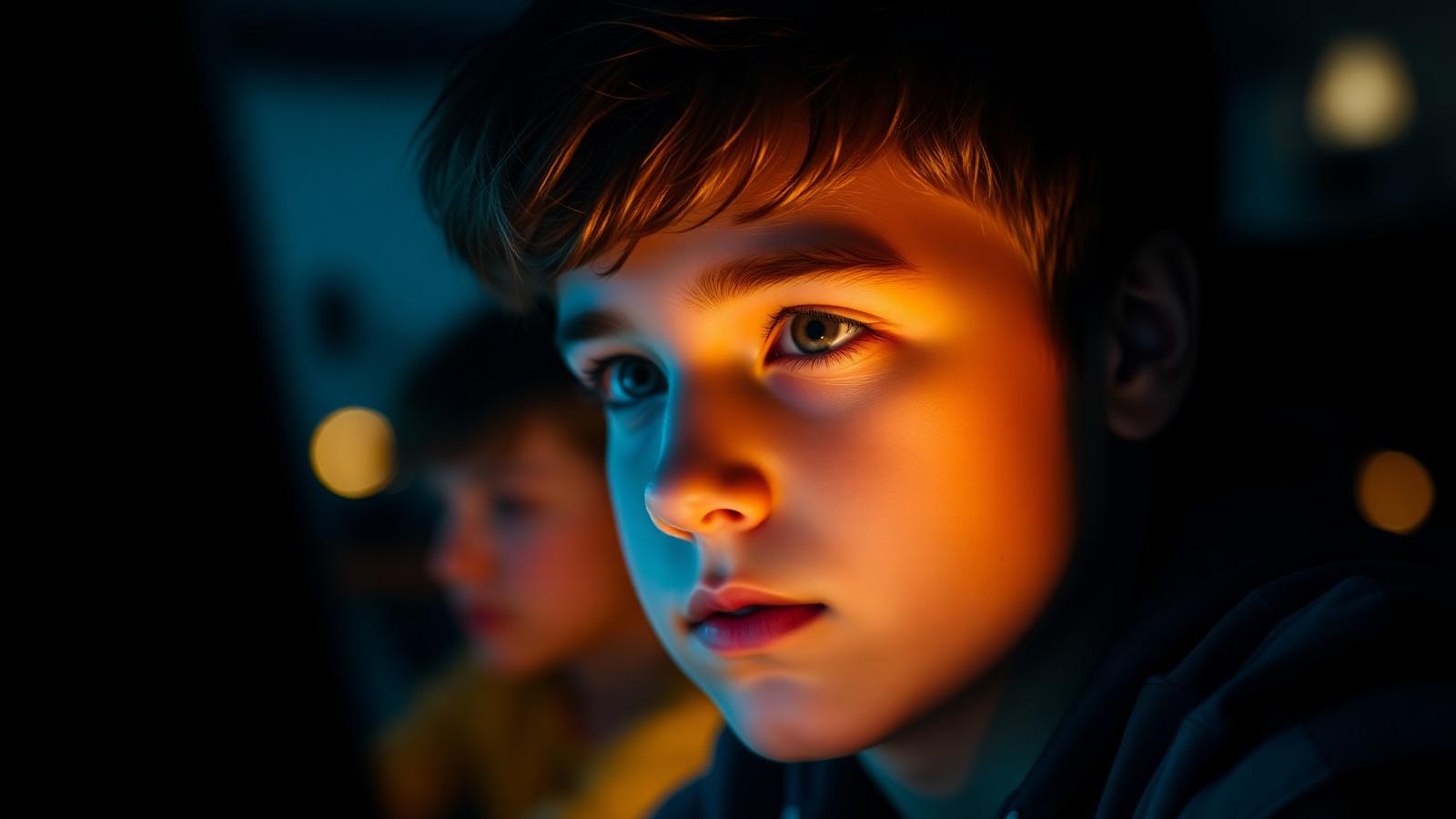
If you want to understand your child's gaming, stop asking what is wrong with them and start asking what is right about the game. The honest answer is humbling. Games are giving kids things that the modern world often forgot to deliver. Once you can see what those things are, you stop fighting the screen and start designing a real life that can actually compete.
A world that is finally fair
School can feel arbitrary. Friendships can feel political. Bodies, money, looks, neighbourhoods, families — most of childhood is shaped by things kids did not choose. Games are different. The rules are written down. Effort is rewarded. Cheaters can be reported. Two players at the same skill level get the same shot.
For a kid who feels that life is unfair, that difference is huge. A game says: here, your effort actually counts. That promise is rarer in real life than we like to admit.
Instant, clear feedback
In real life, feedback is slow, vague, and often emotional. "Try harder." "You can do better." "What is wrong with you?" Months go by between report cards. Coaches barely have time. Bosses, when he becomes one, will be the same.
Games tell your child exactly how he is doing, all the time. Damage numbers. XP bars. Skill ratings. Replays. He knows in 30 seconds whether he played well, what he could have done differently, and what to practice next. That is the kind of feedback the human brain is wired to crave — and most environments do not provide it.
Friends who actually show up
Online friendships are real friendships. Kids talk for hours, share inside jokes, support each other through breakups and family stress, celebrate birthdays, mourn losses. The fact that the friendship started in a lobby does not make it less real.
What games offer socially that real life often does not: friends who are available, accepting, and easy to find. No driving across town. No parents arranging things. No waiting to be invited. He logs on and his people are there.
If you are tempted to dismiss those friendships, pause. For many kids — especially anxious, neurodivergent, introverted, or socially new kids — that lobby is the most welcoming room they have all week.
Identity he gets to choose
Adolescence is identity construction with very few tools. Games hand him a workbench. He can be the leader, the support, the strategist, the funny one, the carry, the healer. He can try on roles and discard them. He can experiment with versions of himself the real world is not making space for.
This is not avoidance. It is rehearsal. The boy who learns to call shots for a squad of five is practicing leadership. The girl who builds elaborate worlds is practicing creativity and patience. Identity work in games is real work — it just looks like play.
A place where he matters
This is the one that hits parents hardest when they finally see it. In the game, your child is needed. The team is short without him. His friends notice when he is online. His skills change the outcome of the match. He is the one who pulled off the play that everyone is still talking about.
Outside the game, many kids are loved but not needed. They are taken care of. They are managed. They are scheduled. They are rarely the difference between something happening and not happening. Mattering is a deep human need, and the game has been quietly meeting it.
Control over a small, predictable world
Real life is uncontrollable in ways that are hard on a developing nervous system. Parents argue. Friends move away. Teachers change. Bodies change. The news is overwhelming. Inside a game, the world is bounded, knowable, and responsive. Buttons do what they are supposed to do. Maps stay the same. Rules are stable.
For an anxious kid, that predictability is regulation. It is not weakness. It is the brain finding the cleanest available place to feel safe.
So what do we do with all of this?
You do not compete with the game by attacking it. You compete by making real life able to deliver a few of the same things, more often, in ways that fit your family.
Bring fairness offline
Make the rules in your house explicit. Apply them consistently. Let your child see that effort, honesty, and contribution are noticed and rewarded. Fairness at home is a quiet superpower.
Give faster, kinder feedback
Tell him what he is doing well, specifically, more often than feels necessary. Notice the small things. Replace vague criticism with one clear, doable next step. Become the kind of voice he wants in his head.
Invest in one real-world community
One. Not five. A team, a class, a club, a youth group, a job, a creative crew. A single place where he is known by name, expected to show up, and missed when he is not there. Belonging offline takes longer to build than online — but it lasts longer too.
Give him real responsibility
Not chores for chores' sake. A real role the family depends on. Be specific: "We need you to handle this." Mattering is built by being needed, not by being praised. See The 6 Needs Behind Gaming Addiction for more on this.
Stage growth he can see
Help him pick one offline skill where progress is visible — strength, an instrument, a craft, a sport, a language. Track it. Celebrate small jumps. Growth he can see is one of the most powerful pulls away from a screen, because the screen is no longer the only place he is becoming someone.
The shift this asks of you
This is not about replacing gaming. It is about widening the world around it. When real life starts to deliver fairness, feedback, friendship, identity, mattering, and growth in even small doses, the game stops being the only room with the lights on. Your child does not have to choose between you and the game. He just needs both rooms to be worth walking into.
Ready to understand what is really happening behind the screen?
Why Won't He Just Log Off? is a practical and compassionate guide for parents who are tired of fighting over gaming and ready to rebuild connection.
Frequently asked questions
Are online friends real friends?
Yes. Kids share real experiences, real emotions, and real support with people they meet through games. The friendship is not less real because it started in a lobby — and for many socially anxious or neurodivergent kids, it may be the most accepting community they have.
Why does gaming feel more rewarding than school or sports?
Games give faster, clearer, and more consistent feedback than almost any offline environment. Effort is visibly rewarded within minutes. School and many sports cannot match that pace, which makes them feel slower and less satisfying even when they are objectively more valuable.
Is it bad that my child gets his sense of identity from games?
Not by itself. Trying on roles in games is healthy rehearsal. It becomes a problem only when the game is the only place he is allowed to be those things — leader, creator, supporter, strategist. Make room for those identities offline too.
How do I compete with the game without banning it?
You do not compete by attacking it. You widen real life so it can offer a few of the same things — fairness, feedback, belonging, mattering, growth — in small, consistent doses. The game stops being the only room with the lights on.
Does this mean I should let him play as much as he wants?
No. Understanding what the game gives him is not the same as removing limits. Calm, fair boundaries still matter — see our guide on setting gaming boundaries without starting a war. Understanding and structure work together, not against each other.